How to Price a Luxury Home in Cape Elizabeth
April 2, 2026
April 2, 2026
Wondering why one Cape Elizabeth waterfront home commands immediate attention while another lingers, even when both seem impressive on paper? In this market, pricing is not just about square footage or a townwide median. If you are preparing to sell a luxury waterfront property in Cape Elizabeth, the right price comes from understanding how buyers value views, frontage, access, condition, and risk. Let’s dive in.
Cape Elizabeth is a small coastal market, which means broad market averages can only tell you so much. According to Redfin’s Cape Elizabeth housing market snapshot, the median sale price was $715,000 in February 2026, while public listing data for 04107 has shown a much higher median listing price and longer days on market in some periods.
That gap matters because luxury waterfront homes do not behave like the rest of the market. A direct-ocean estate, a tidal-front property, and a home with deeded beach access may all be called waterfront, but buyers do not price them the same way.
The biggest pricing mistake is using townwide numbers or nearby non-comparable sales as your anchor. For a Cape Elizabeth waterfront home, the best comps are homes with a similar water type, view exposure, frontage, access pattern, elevation, and condition.
The recent sale of 55 Zeb Cove Road is the clearest example of estate-scale oceanfront value. The property sold for $13.4 million in September 2025 and included about 7,600 square feet, 7.94 acres, and roughly 1,200 feet of ocean frontage.
That does not mean every waterfront home should benchmark against Zeb Cove. It does show, however, that truly rare coastal properties in Cape Elizabeth can attract exceptional pricing when the setting and scale align.
Here are several recent or active examples that help illustrate the pricing spread:
These properties are useful because they show just how much value can shift based on the type of waterfront experience a home offers.
In Cape Elizabeth, buyers are often purchasing the view as much as the house. Listings like 10 Sunny Bank Road and 1275 Sawyer Road emphasize the water outlook in their marketing, which tells you a lot about buyer priorities.
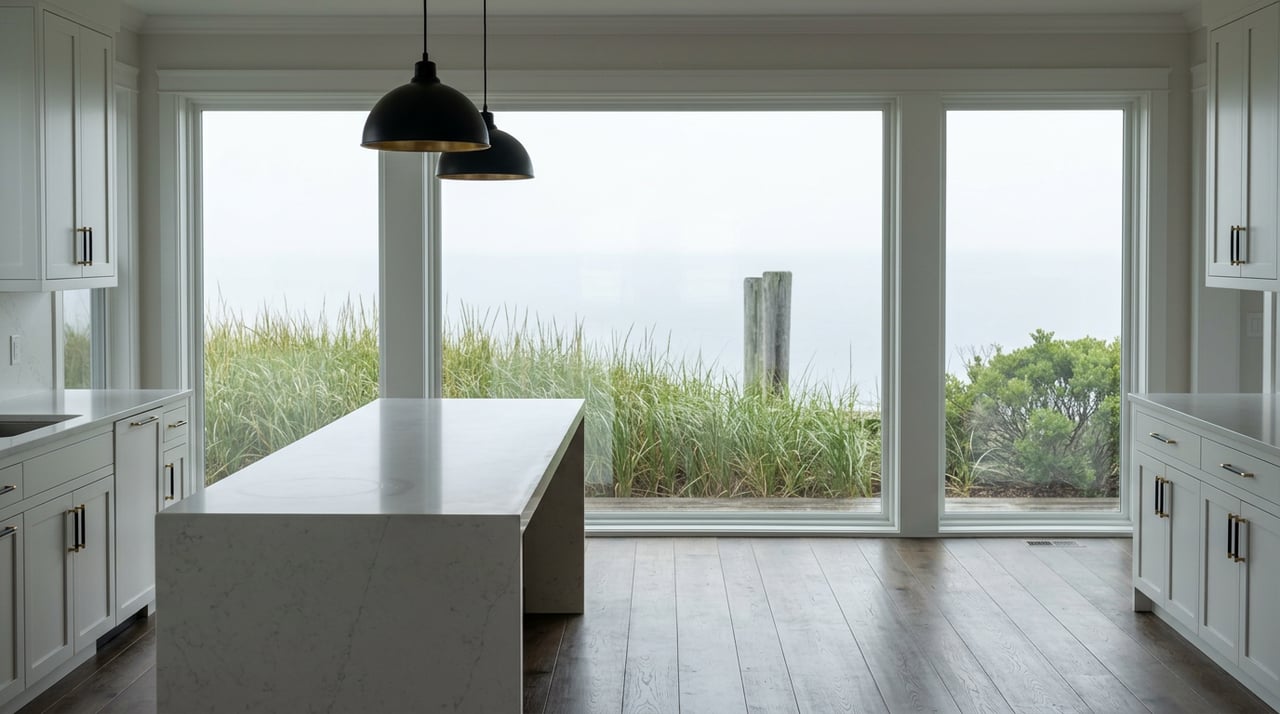
When pricing a luxury waterfront home, view corridor quality matters in a very practical way. Buyers notice how much water they can see, from which rooms, how open the sightlines feel, and whether the home captures sunrise, sunset, or broad horizon views.
A home with a wider, more immersive water view can justify a stronger price than a similar home with only partial or seasonal visibility.
Not all frontage is equal. A property with expansive direct ocean frontage will be evaluated differently than a tidal lot, a cove setting, or a home with deeded water access.
The contrast among recent Cape Elizabeth properties makes that clear. 55 Zeb Cove Road offered roughly 1,200 feet of ocean frontage on nearly eight acres, while 12 Salt Spray Lane offered 100 feet of ocean frontage, and 25 Ocean Avenue included deeded right-of-way access to Crescent Beach.
That means pricing should account for more than lot size alone. You also need to weigh:
For many buyers, a private and peaceful waterfront setting carries a premium, especially when it feels hard to replicate.
Cape Elizabeth’s coastline is varied, and that variety directly affects value. According to Maine DACF beach and coastal information, the town includes sandy beach environments like Crescent Beach, cove settings such as Kettle Cove, and the rocky headlands and sweeping views associated with Two Lights.
Each shoreline type creates a different buyer appeal. A sandy setting may feel more recreational, while elevated rocky coastline may offer more dramatic views and privacy.
But shoreline type also affects the regulatory picture. The town references FEMA floodplain zones, and Maine DEP’s shoreland zoning program and local shoreland rules can affect land use, setbacks, and future changes. In simple terms, the coast that adds value can also create limits that buyers will price in.
Luxury buyers expect the home to feel aligned with the setting. According to the National Association of Realtors consumer pricing guide, pricing decisions should account for size, location, amenities, condition, upgrades, and repairs.
Cape Elizabeth examples reinforce that point. 12 Salt Spray Lane is marketed with a newly remodeled interior, while 25 Ocean Avenue shows how a property can still require multiple reductions if the asking price gets ahead of the comp set.
Condition can support a premium, but it cannot rescue an unrealistic list price. In this segment, buyers are typically comparing both lifestyle and value very carefully.
It is tempting to test the market, especially when your home is unique. But luxury waterfront buyers are informed, and stale pricing can shift the conversation in the wrong direction.
The sale of 25 Ocean Avenue is a useful example. The property began at $3.95 million, then reduced to $3.695 million and later to $3.35 million before selling for $3.225 million after 95 days on market.
That does not mean every price adjustment is a problem. It does mean that overreaching early can cost time, weaken momentum, and change how buyers perceive value.
For a waterfront property, presentation is not cosmetic. It is part of the pricing strategy because buyers are evaluating the full experience of the home.
The NAR 2025 staging snapshot found that 83% of buyers’ agents said staging made it easier for buyers to visualize a property as a future home. In waterfront homes, that often means keeping sightlines open, reducing visual clutter near windows, and emphasizing the rooms that connect most strongly to the view.
This is where a visual-first strategy can make a measurable difference. In a luxury coastal market, strong imagery and thoughtful editorial presentation help buyers understand why your home belongs at its price point.
Even in a unique market, timing can influence traffic and urgency. Realtor.com’s 2025 best time to sell report found that the national peak listing week was April 13 through 19, when homes historically sold faster and attracted more views.
For Cape Elizabeth waterfront sellers, the practical takeaway is simple. If you can, complete repairs, staging, and photography prep during winter so your home is ready before spring demand builds.
Luxury buyers may shop year-round, but strong early-season presentation can put your property in front of motivated buyers at the right moment.
One of the most important parts of pricing happens before a buyer ever makes an offer. Flood exposure, insurance costs, setbacks, septic considerations, access, and permit history can all affect what a buyer is willing to pay.
FEMA’s flood insurance guidance notes that flood insurance is separate from homeowners insurance and that coastal properties, especially those in Zone VE, may be subject to more stringent building practices. Cape Elizabeth’s own ordinance framework references multiple FEMA flood zones, including VE.
This is why two homes with similar views can command different values. If one has a cleaner regulatory and insurance profile, buyers may view it as the lower-risk opportunity.
If you are pricing a luxury waterfront home in Cape Elizabeth, it helps to think in a clear hierarchy. In this market, value is often driven in this order:
That framework is far more useful than relying on a broad median price for the town. Waterfront pricing works best when you start with the closest true comps, then make disciplined adjustments for the features buyers actually pay for.
If you are considering selling, a strong valuation should blend hard data with the kind of local, property-specific judgment that this segment requires. For a home where the setting is part of the story, pricing and presentation need to work together from day one.
If you want a tailored pricing strategy for your Cape Elizabeth waterfront property, Emilie Cole offers thoughtful market guidance, elevated presentation, and a concierge-level approach designed for distinctive coastal homes.
Stay up to date on the latest real estate trends.
October 1, 2026
September 24, 2026

September 17, 2026
September 10, 2026
September 3, 2026

August 27, 2026
August 20, 2026
August 13, 2026
August 6, 2026