In-Town Vs. Coastal Yarmouth: Which Suits Your Everyday Life?
June 11, 2026
June 11, 2026
If you love Yarmouth but feel torn between village convenience and a more water-centered setting, you are not alone. In this town, your address can shape everything from your commute and errands to how often you see the harbor or reach for your car keys. This guide will help you compare in-town and coastal Yarmouth so you can choose the setting that fits your real everyday life. Let’s dive in.
Yarmouth is best understood as two overlapping lifestyles. Town materials describe an older lower village near the Royal River mouth and an inland upper village centered on Main Street and the railroad era, with the village growing around homes, shops, businesses, and churches.
That pattern still matters today. Main Street remains the historic heart of the village, while Route 1 functions as the corridor where many residents handle daily needs. For you as a buyer, the biggest difference is simple: in-town Yarmouth tends to support a more walkable, errand-friendly routine, while coastal and island areas often offer more privacy, water access, and a slower, more scenic feel.
If your ideal day includes grabbing coffee, running errands efficiently, and staying close to the center of town, in-town Yarmouth may feel like the most natural fit. The town’s planning documents describe Main Street as walkable and lined with small businesses, while Route 1 serves many practical daily stops such as grocery and pharmacy needs.
That kind of layout can make daily life feel easier. Instead of planning every small outing around drive time, you may find that more of your routine stays compact and connected. For many buyers, that ease becomes one of the biggest quality-of-life benefits of living near the village core.
In-town Yarmouth often suits buyers who want a steady rhythm built around convenience. You may be able to combine errands, dining, and outdoor time into one trip rather than driving from one end of town to another.
A recent in-town listing on Main Street highlighted walking distance to the boatyard, restaurants, and shops. While each property is different, that description reflects the kind of village-based lifestyle many buyers picture when they want to be near the center of Yarmouth.
Commute convenience matters in Yarmouth because the town reports that 80% of residents work outside the town. If you travel regularly toward Portland or elsewhere in the greater Portland corridor, that can make location a major part of your decision.
METRO’s BREEZ express service runs between Portland, Yarmouth, Freeport, Brunswick, and Bath, with a Yarmouth Town Hall stop. The route page notes 15 round trips Monday through Friday and 6 round trips on Saturdays, which can make in-town living especially practical if you want a car-light option or an easier park-and-ride routine.
Yarmouth has also been investing in better foot and bike connections near the village. A 2024 Bike and Pedestrian Committee letter highlights work such as Beth Condon Memorial Pathway extensions, links to the village commercial area, and improved access to BREEZ stops.
For you, that can mean more flexibility in how you move through the day. Short trips on foot or by bike are more realistic in and around the village core than they are from more water-oriented parts of town.
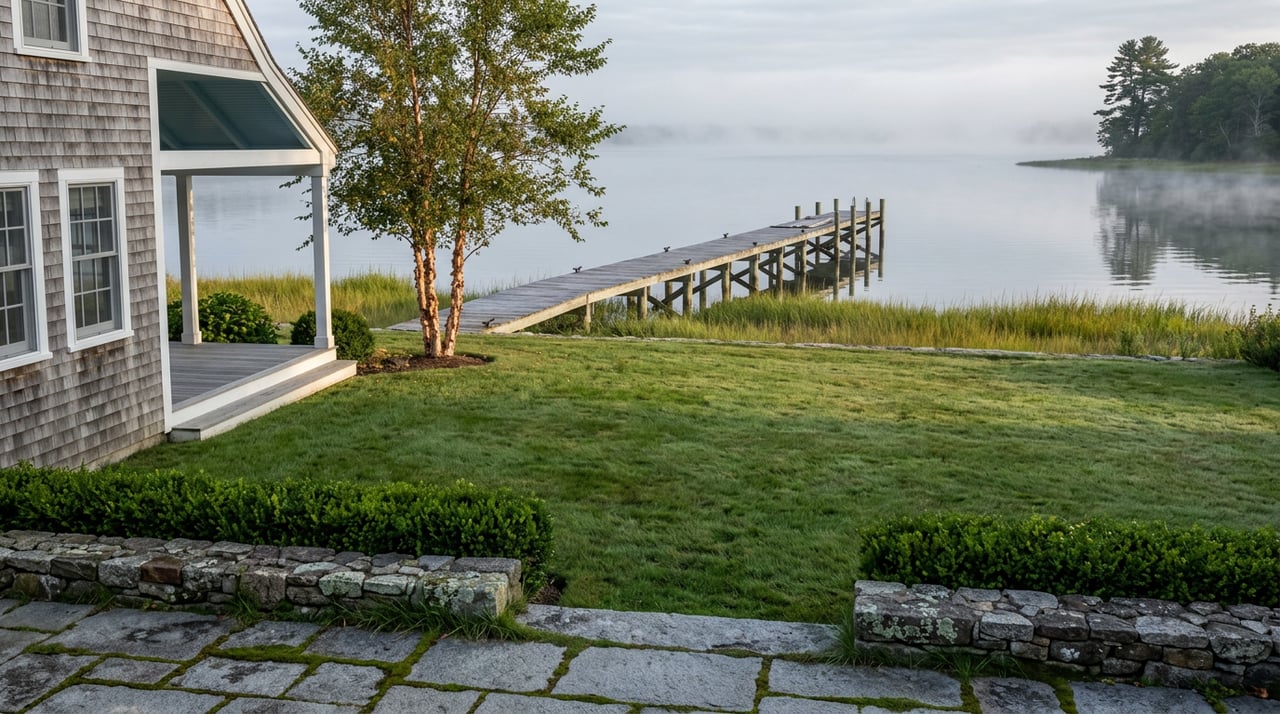
If you picture your free time around the harbor, docks, beaches, or boating access, coastal Yarmouth may be the stronger fit. The town’s harbor and waterfront system includes places such as Town Harbor, Madeleine Point, Littlejohn Island, Wharf Road, and old Town Landing Road off Princes Point.
Town planning documents also identify public access or launch areas such as Sunset Point, Sandy Point Beach, Littlejohn Dock, and Madeleine Point. The harbor program supports ramps, floats, docks, and other facilities tied to waterfront use, which helps explain why this part of Yarmouth feels more marine-focused in daily life.
Living near the coast usually means your setting does more of the talking. You may trade quick access to shops and transit for more privacy, water views, and easier access to kayaking, beach time, or small-boat activity.
For some buyers, that trade feels more than worth it. If you want your home life to feel more like a retreat than a town-center base, coastal or island Yarmouth often aligns with that goal.
The practical trade-off is transportation. Yarmouth’s transit, retail, and service nodes cluster inland, while the coast is shaped more by waterfront assets than by shopping and everyday commercial stops.
In plain terms, coastal and island addresses are typically more car-dependent. If you live there, you will likely drive more often for errands, commuting, and access to the village core.
One of the best ways to decide between these settings is to think about how you actually spend your free time. Do you want quick access to trails and village green space, or do you want docks, launches, and the shoreline close at hand?
In-town Yarmouth offers a strong recreation network tied to the village and Route 1 corridor. The Beth Condon Memorial Pathway runs along Route 1 and detours into the village at Town Hall and Royal River Park, while the West Side Trail connects neighborhoods, office parks, preserves, and public beaches.
The comprehensive plan also points to Grist Mill Park and the riverfront corridor as part of the downtown recreation network. If your ideal routine includes an easy walk, a bike ride, or time near the river before or after work, in-town living may support that especially well.
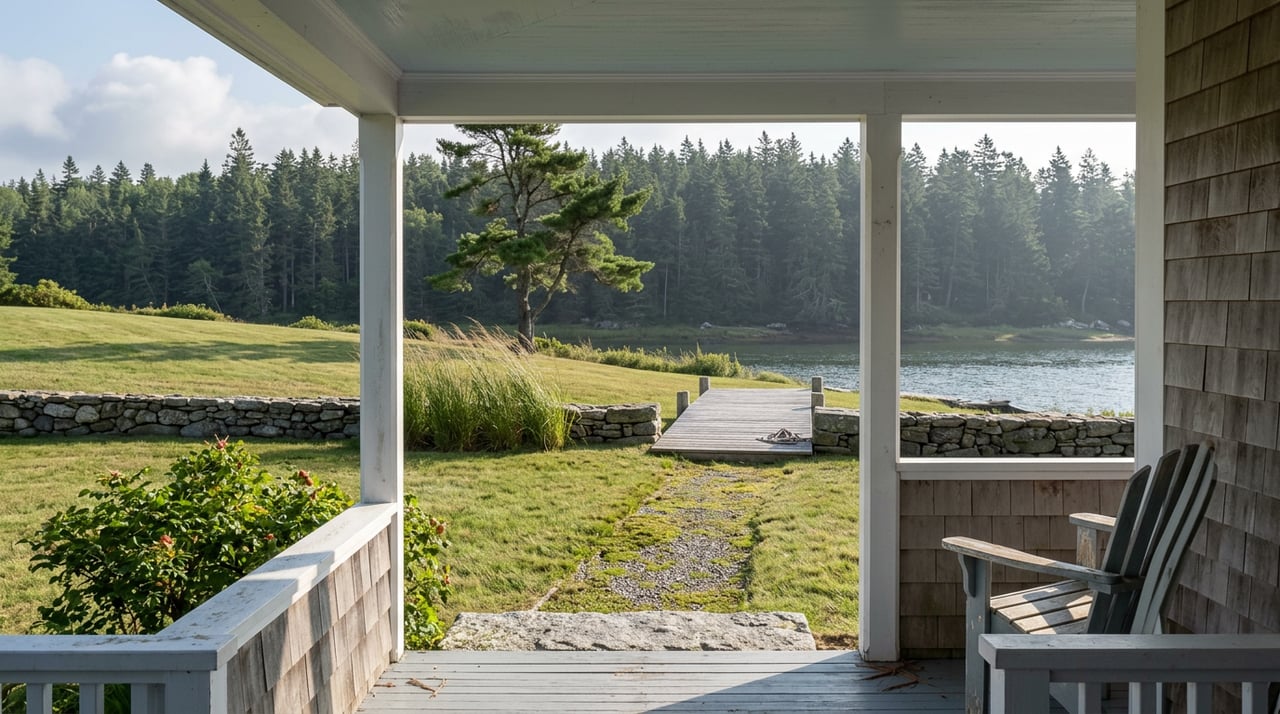
Coastal Yarmouth, by contrast, leans into the harbor and shoreline. If launching a kayak, spending time near a dock, or building your weekends around the water matters most, the coastal side of town will likely feel more aligned with your lifestyle.
The experience of each area is not only about location. It is also about the kinds of homes and streetscapes you are likely to find.
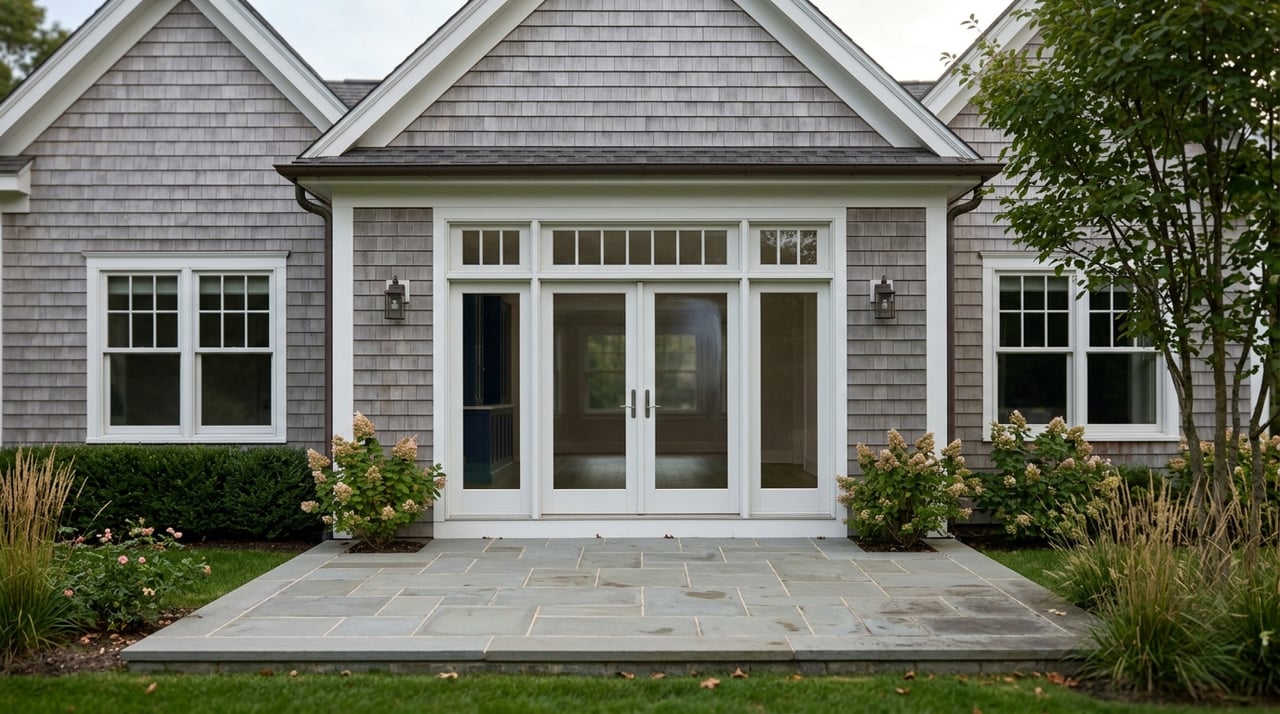
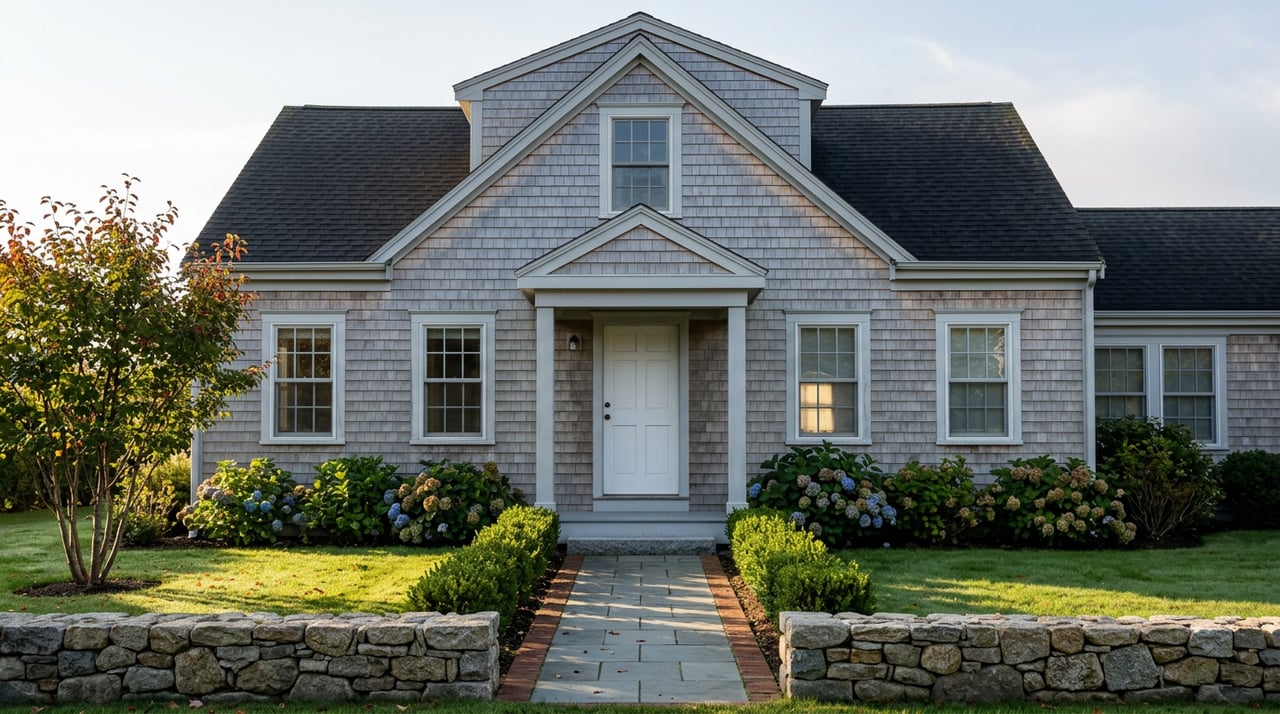
In-town Yarmouth leans toward historic village housing, including wood-framed residential buildings, mixed commercial-residential blocks, and older homes tied to the growth of Main Street and the railroad era. The town’s design manual notes that Colonial Revival is common, and it also highlights the Shingle style as part of the area’s architectural history.
That gives in-town Yarmouth a distinctive sense of character. If you are drawn to historic fabric, classic village streets, and homes with a more established architectural presence, this side of town often delivers that feel.
Coastal and island settings bring a different visual story. Here, the appeal often centers on coastal-cottage sensibility, water views, and a more tucked-away environment that feels separate from the village core.
Yarmouth is an expensive and competitive market overall. Redfin reports a townwide median sale price of $977,500 in March 2026, with a median of 7 days on market, which suggests buyers should be prepared to move quickly when the right property appears.
Within in-town Yarmouth, pricing can still span a wide range. Recent examples in the research include an in-town farmhouse on West Elm Street at $1.595 million, a village-area home on Magnolia Lane at $1.7 million, and a Main Street home with a Redfin estimate of $748,721.
On the coastal side, prices can be even more variable because sales volume is thin. Royall Point examples in the research cluster from the low $1 millions into the upper $2 millions, while recent island snapshots vary widely, including Cousins Island sales from $318,250 to $4 million and a recent Littlejohn Island median of $1.7 million based on one sale.
The key takeaway is not that one area is always more expensive than the other. It is that premium renovated village homes already command high prices, while waterfront and water-view properties can carry significant premiums and often come with fewer comparable sales.
If you are deciding between in-town and coastal Yarmouth, the clearest answer usually comes from your routine rather than from a map. Think about where your time goes on a normal weekday, not just on a sunny Saturday.
In-town Yarmouth may be the better fit if you want:
Coastal Yarmouth may be the better fit if you want:
Neither choice is universally better. The real question is whether you value village convenience more, or whether water-centric living is important enough to shape the rest of your routine.
If you are weighing both options, it often helps to compare not just homes, but the logistics around them. Commute patterns, errand frequency, and how often you actually use waterfront access can quickly reveal which side of Yarmouth fits you best.
Whether you are searching for a historic in-town home, a coastal retreat, or a property with long-term lifestyle value, Emilie Cole can help you narrow the choices and build a search around how you want to live.
Stay up to date on the latest real estate trends.
October 8, 2026
October 1, 2026
September 24, 2026
September 17, 2026
September 10, 2026
September 3, 2026
August 27, 2026
August 20, 2026
August 13, 2026